
Elul 22 (4 September 2026) The KING is in the FIELD! AWAKEN the BELIEVERS! CONGREGATION…

THE JOURNEY FROM COFFEE BEAN TO CUP AND THE SIMILARITIES WITH OUR JOURNEYS FROM BIRTH TO DESTINY
The coffee that we enjoy has taken a long journey from a seed being planted into the soil of the earth to an enjoyable cup of coffee! In a way this journey is very similar to the long journey each of us begin from a seed or sperm of your biological father, fertilizing an egg of your mother and planted into the ground of your mother’s womb until you reach your purpose in life! It is on this journey that we find out how we, like a coffee bean (seed), can ensure that we go through a series of steps to bring out the best in us and successfully reach our purpose while enjoying the journey and being filled with love, peace and joy throughout it!
Between the time coffee seeds are planted, picked and purchased, it goes through the following steps:
1. Planting of the beans (seeds)
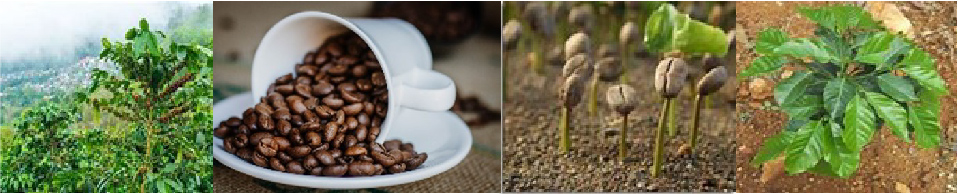
We don’t think of it in that way, but the coffee bean is actually a seed that is dried and roasted and used to brew coffee! If not used for coffee these seeds are planted and grow into a coffee tree. Coffee seeds are planted in large beds in shaded nurseries. The seedlings are watered frequently and shaded from bright sunlight until they are hearty enough to be permanently planted. Planting often takes place during the rainy season so that the soil remains moist while the roots become firmly established.
We as humans, after birth, also need careful nurturing and protection to establish strong and firm roots to become balanced adults. But what if we grew up without good nurturing and protection and with weak or bad roots? Is there still hope? We will be exploring damaged seeds and roots during this part of our journey and discover ways of repairing and healing.
2. Harvesting the cherries (fruits)

It will take approximately 3 to 4 years for the newly planted coffee trees to bear fruit. The fruit, called the coffee cherry, turns a bright, deep red when it is ripe and ready to be harvested. The crop is usually picked by hand in a labor-intensive and difficult process. All of the cherries are stripped off of the branch at one time. Only the ripe cherries are harvested, and they are picked individually by hand. Pickers rotate among the trees every eight to 10 days, choosing only the cherries which are at the peak of ripeness. Because this kind of harvest is labor intensive and more costly, it is used primarily to harvest the finer Arabica beans. A good picker averages approximately 45 to 90 kilograms of coffee cherries a day, which will produce 9 to 18 kilograms of coffee beans. Each worker’s daily haul is carefully weighed, and each picker is paid on the merit of his or her work. The day’s harvest is then transported to the processing plant.
We as humans also bear fruit which is visible in our behavior towards ourselves and others. The type of fruit we bear depends on the condition of our hearts and minds. Our fruits are influenced by our roots, therefore if we repair and heal the roots there can be improvement in our fruits, improving relationships in our lives and therefore also improving our health and contentment.
3. Processing the cherries (removing the skin and pulp)

Once the coffee has been picked, processing must begin as quickly as possible to prevent fruit spoilage. Coffee is usually processed in one of two ways:
- The Dry Method
This is the old method of processing coffee where water resources are limited. The freshly picked cherries are simply spread out on huge surfaces to dry in the sun. In order to prevent the cherries from spoiling, they are raked and turned throughout the day, then covered at night or during rain to prevent them from getting wet. Depending on the weather, this process might continue for several weeks for each batch of coffee until the moisture content of the cherries drops to 11%.
- The Wet Method
In this method the pulp is removed from the coffee cherry after harvesting so the bean is dried with only the parchment skin left on. First, the freshly harvested cherries are passed through a pulping machine to separate the skin and pulp from the bean. Then the beans are separated by weight as they pass through water channels. The lighter beans float to the top, while the heavier ripe beans sink to the bottom. They are passed through a series of rotating drums which separate them by size. After separation, the beans are transported to large, water-filled fermentation tanks. Depending on a combination of factors – such as the condition of the beans, the climate and the altitude – they will remain in these tanks for anywhere from 12 to 48 hours to remove the slick layer of mucilage that is still attached to the parchment. While resting in the tanks, naturally occurring enzymes will cause this layer to dissolve. When fermentation is complete, the beans feel rough to the touch. The beans are rinsed by going through additional water channels and are ready for drying.
Just as the coffee cherries have to go through a process to remove the skin and the pulp, our old nature also has to be removed by the washing of the Holy Spirit and the Word of God and thereby renewing our minds and hearts to live lives in victory.
4. Drying the beans (Prepare for storage in sisal bags)

The beans can be sun-dried by spreading them on drying tables or floors, where they are turned regularly, or they can be machine-dried in large tumblers. The dried beans are known as parchment coffee and are warehoused in jute or sisal bags until they are readied for export.
On our journeys through life, God sometimes allow circumstances to take us into the desert. This is because there are some lessons that can only be learned in the desert. And it may serve as a special time to lead us into the direction of our purpose. God never let us go to the desert alone, He always goes with us. Desert experiences teach us about dependence on God, getting stronger and learning to put on our armor.
5. Milling the beans

Before being exported, the coffee is processed in the following manner:
* Hulling machinery removes the parchment layer from the wet processed coffee. Hulling dry processed coffee refers to removing the entire dried husk of the dried cherries.
* Polishing is an optional process where any silver skin that remained on the beans after hulling is removed by machine.
* Grading and sorting are done by size and weight, and beans are also reviewed for color flaws or other imperfections. Beans are sized by being passed through a series of screens. They are also sorted by using an air jet to separate heavy from light beans.
Finally, defective beans are removed either by hand or by machinery. Beans that are unsatisfactory due to deficiencies (unacceptable size or color, over-fermented beans, insect-damaged or unhulled), are removed. In many countries, this process is done both by machine and by hand, ensuring that only the finest quality coffee beans are exported.
Sometimes we may feel as if we are milled in situations in our lives. The reason for it may be to take away our hardness of heart and teaching us to develop empathy with those around us. The Bible also teaches us that just as these beans are sorted, we will be sorted or judged by God based on our fruits, the way we developed our given talents and the way we choose to live our lives. Because God loves us and does not want to condemn us, He encourages us in His Word to choose life and not death.
6. Exporting the beans

The milled beans, now referred to as green coffee, are loaded onto ships in either jute or sisal bags loaded in shipping containers, or bulk-shipped inside plastic-lined containers.
Yeshua came to earth to heal the broken hearted, to set the captives free, to open the eyes of the blind and to tell people the truth and the Good News of salvation. He showed His disciples how to follow in His footsteps with their own ministries to heal people psychologically and physically and He left all of us with this same instruction, reaching people across the world to the ends of the earth.
7. Roasting and tasting the coffee

Coffee is repeatedly tested for quality and taste. This process is referred to as cupping and usually takes place in a room specifically designed to facilitate the process.
- First, the taster — usually called the cupper — evaluates the beans for their overall visual quality. The beans are then roasted in a small laboratory roaster, immediately ground and infused in boiling water with carefully controlled temperature. The cupper noses the brew to experience its aroma, an essential step in judging the coffee’s quality.
- After letting the coffee rest for several minutes, the cupper breaks the crust by pushing aside the grounds at the top of the cup. Again, the coffee is nosed before the tasting begins.
- To taste the coffee, the cupper slurps a spoonful with a quick inhalation. The objective is to spray the coffee evenly over the cupper’s taste buds and then weigh it on the tongue before spitting it out.
Samples from a variety of batches and different beans are tasted daily. Coffees are not only analyzed to determine their characteristics and flaws, but also for the purpose of blending different beans or creating the proper roast. An expert cupper can taste hundreds of samples of coffee a day and still taste the subtle differences between them.
God allows us to pass through test and trials to develop our characters to become more like Yeshua our Messiah, loving God the Father above all else and loving other people in the same way we love ourselves. It entails learning from the Word and from experiences and then being tested, if we fail the test, it only means we need more development before we can proceed to the next level in reaching our purpose.
8. Roasting the coffee

Roasting transforms green coffee into the aromatic brown beans that we purchase in our favorite stores or cafés. Most roasting machines maintain a temperature of about 550 degrees Fahrenheit. The beans are kept moving throughout the entire process to keep them from burning.
When they reach an internal temperature of about 400 degrees Fahrenheit, they begin to turn brown and the caffeoyl, a fragrant oil locked inside the beans, begins to emerge. This process called pyrolysis is at the heart of roasting — it produces the flavor and aroma of the coffee we drink.
After roasting, the beans are immediately cooled either by air or water. Freshly roasted beans must reach the consumer as quickly as possible.
Just like the coffee beans have to be roasted at a very high temperature to release their full flavor and aroma, we also need to be baptized by Yeshua our Messiah with the fire of the Holy Spirit to bring out the very best in us and to allow us to spread His fragrance and aroma wherever we go and to lead meaningful lives.
9. Grinding the coffee

The objective of a proper grind is to get the most flavor in a cup of coffee. How coarse or fine the coffee is ground depends on the brewing method.
The length of time the grounds will be in contact with water determines the ideal grade of grind Generally, the finer the grind, the more quickly the coffee should be prepared. That’s why coffee ground for an espresso machine is much finer than coffee brewed in a drip system.
Each one of us is wonderfully made with unique characteristics, talents and gifts of the Holy Spirit. When we are developed and put in the right environment we can grow and prosper to the benefit of ourselves and other people in line with God’s good purpose and plans for our lives.
10. Enjoying the coffee

The coffee bean journey has ended when it reaches the coffee drinker with its lovely aroma and satisfying the taste buds!
While on earth it is God our Father’s intention and wish for us, His children, to live blessed life’s and enjoy His peace and rest. And at the end of our lives move on to live the life He intended for human beings to live in the first place, in joy and wonder with Him forever!